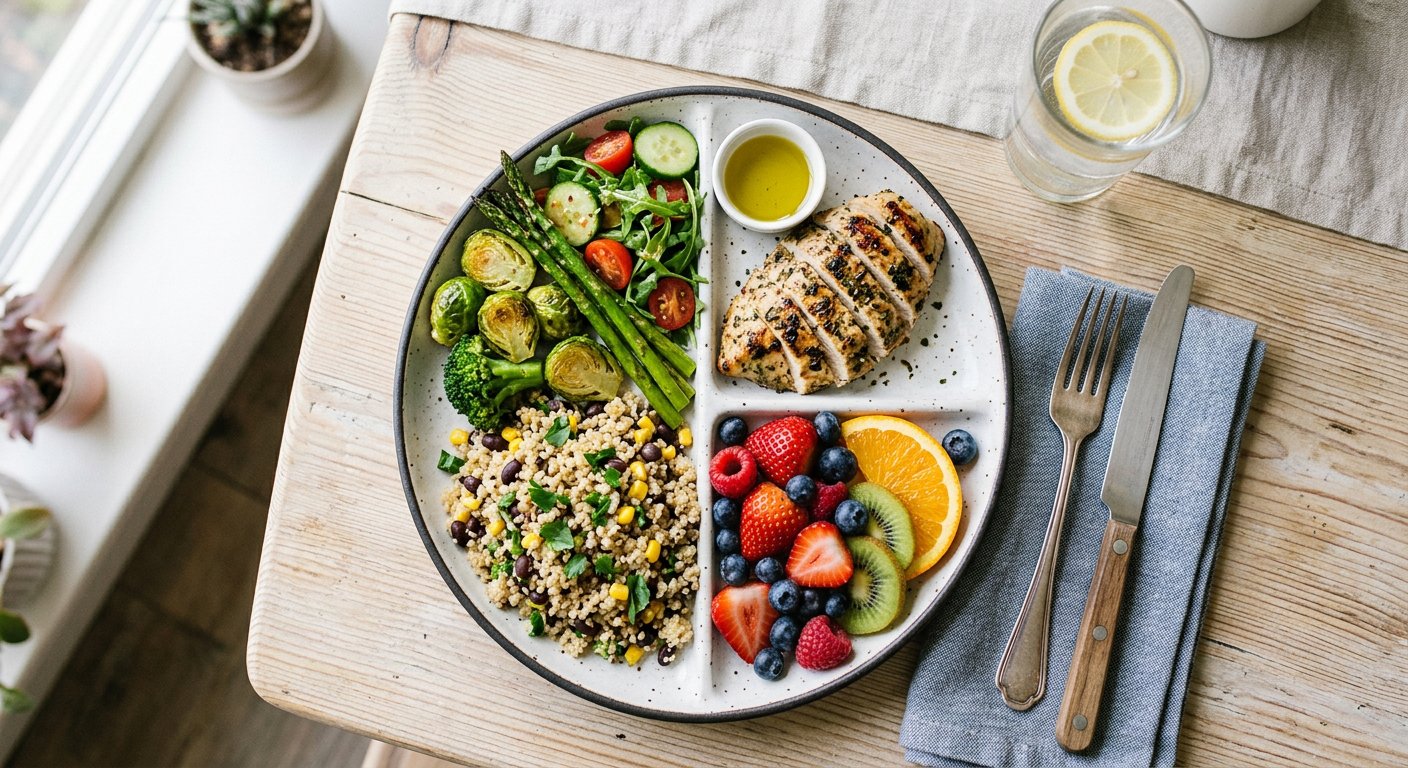
If nutrition advice has ever left you more confused than when you started, you are in good company. Diets contradict each other, superfoods come and go, and most people end up simply guessing. The good news is that a genuinely balanced meal does not require a spreadsheet, a scale or a degree in biochemistry — it requires a way of looking at your plate.
A Simple Way to Picture Your Plate
Rather than counting anything, divide your plate visually at each main meal. Half of it is given to vegetables and fruit, a quarter to a source of protein, and the remaining quarter to starchy foods, ideally whole grain versions. Add a small amount of healthy fat for flavour and satiety, and drink water alongside. That single image covers the vast majority of what balanced eating means.
- Half the plate: vegetables and fruit, in as many colours as you can manage.
- A quarter: protein such as pulses, eggs, fish, tofu or lean meat.
- A quarter: starchy foods like rice, potatoes, pasta or bread.
- A small addition: healthy fats such as olive oil, nuts or avocado.
"A balanced plate is not a moral achievement. It is simply a practical shape you can reach for when you are tired, busy and standing in front of an open fridge."
Why This Works When Restriction Fails
Restrictive eating tends to work for a short while and then collapse, usually followed by overeating and a heavy dose of guilt. A plate-based approach avoids that cycle because it focuses on what to add rather than what to remove. When you fill half your plate with vegetables first, there is simply less room left for the foods you want to moderate.
Practical habits that make it easier
- Shop with a rough plan so the healthy choice is also the easy choice.
- Prepare vegetables as soon as you get home, while you still have the energy.
- Cook once, eat twice — batch cooking makes balance effortless midweek.
- Eat slowly and without screens so fullness signals have time to arrive.
Eating Out Without Abandoning Your Goals
Restaurant meals are typically larger, saltier and richer than what we would cook at home — and that is fine occasionally. You can still nudge the balance by asking for extra vegetables, choosing a grilled rather than fried option, and being mindful of sugary drinks. One meal out does not undo a week of good habits, just as one salad does not rescue a week of poor ones.
Hydration, the Quiet Half of Nutrition
Thirst is easily mistaken for hunger, and mild dehydration shows up as fatigue and poor concentration. Keeping water within reach through the day is one of the simplest upgrades available. If plain water feels boring, a slice of citrus, mint or a few berries can make it more appealing without adding sugar.
Start With One Meal
Do not attempt to transform every meal at once. Pick the meal you eat most often and apply the plate framework there first. Once it feels automatic, move to the next. Progress built this way tends to last, which is the only kind of progress that truly counts.